
Top 10 Skills for Remote Jobs
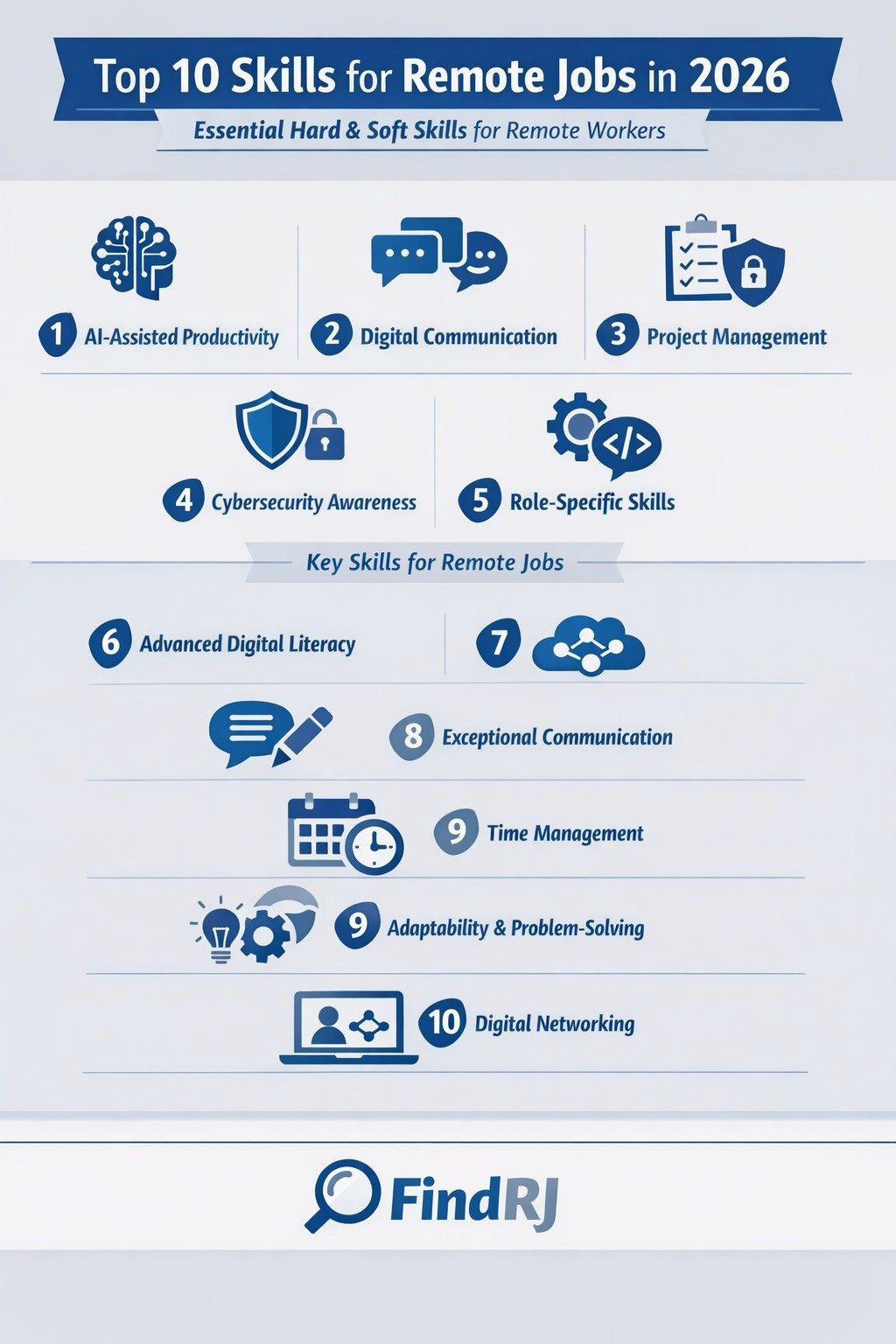
Remote work is no longer a trend — it is the new standard. Whether you are applying for your first remote role or leveling up your career, understanding the skills employers’ value in 2026 is the fastest way to stand out.
This guide breaks down the hard skills, soft skills, digital tools, and work habits that top companies expect from remote professionals — plus how to showcase them on your resume and in interviews.
1. AI‑Assisted Productivity
AI has become a core part of remote workflows. Employers expect you to know how to use AI tools to work faster and smarter.
Key tools:
- ChatGPT‑style assistants
- Notion AI
- Microsoft Copilot
- AI meeting summarizers (Fireflies, Otter)
- AI writing/editing tools
- Automation platforms (Zapier, Make)
How to show it:
“Used AI tools to automate repetitive tasks, saving 5+ hours weekly.”
2. Digital Communication Tools
Clear communication is the backbone of every remote team. You should be confident using:
- Slack
- Microsoft Teams
- Zoom
- Loom (async video updates)
- Professional email etiquette
Why it matters:
Strong communication reduces misunderstandings and speeds up decision‑making.
3. Project Management Fundamentals
Even if you are not a manager, you must understand how to organize tasks, track progress, and collaborate efficiently.
Popular tools:
- Asana
- Trello
- ClickUp
- Notion
- Jira (for tech teams)
Employers want:
People who can break down tasks, estimate timelines, and update progress without being chased.
4. Cybersecurity Awareness
Remote work increases exposure to digital threats. Basic cybersecurity knowledge is now a must.
Core areas:
- Password managers
- Two‑factor authentication (2FA)
- Secure file sharing
- Phishing detection
- Safe device usage
Bonus:
Certifications like Google Cybersecurity or CompTIA Security+ help you stand out.
5. Role‑Specific Technical Skills
Depending on your field, employers expect proficiency in relevant tools and platforms:
- Developers: Git, CI/CD, cloud platforms
- Marketers: SEO, analytics, CMS tools
- Designers: Figma, UX fundamentals
- Customer Support: CRM tools (Zendesk, Intercom)
- Data roles: SQL, Python, BI dashboards
6. Advanced Digital Literacy
Beyond basic computer skills, remote workers must navigate cloud‑based tools, troubleshoot issues independently, and adapt quickly to new systems.
This includes:
- Collaboration tools (Slack, Asana, Trello)
- Video conferencing platforms (Zoom, Teams)
- Data visualization tools
- Cloud storage systems
7. Exceptional Communication (Written & Verbal)
With fewer in‑person interactions, communication becomes your superpower.
You need to excel at:
- Asynchronous communication
- Clear email writing
- Structured project updates
- Virtual meeting etiquette
- Active listening
8. Self‑Discipline & Time Management
Remote work gives freedom — but also demands responsibility.
Successful remote workers:
- Plan their day
- Prioritize tasks
- Meet deadlines
- Maintain focus
- Create a productive workspace
9. Adaptability & Problem‑Solving
Remote environments change fast. Employers value people who can:
- Learn new tools quickly
- Adjust to new workflows
- Solve problems independently
- Stay resilient during change
10. Digital Networking & Relationship Building
Building professional relationships online requires intention.
This includes:
- Engaging on LinkedIn and industry platforms
- Participating in virtual events
- Maintaining strong communication with colleagues
- Building trust in a digital environment
The remote job market in 2026 rewards professionals who combine technical skills, digital fluency, strong communication, and proactive ownership.
Mastering these skills not only makes you more employable — it positions you as a top performer in any distributed team.