Remote Jobs and Scam
Trust Your Gut
The allure of remote work is undeniable, offering flexibility and convenience. However, this booming industry has also become a fertile ground for scammers looking to exploit eager job seekers. Recognizing the red flags is your first line of defense against these deceptive schemes.
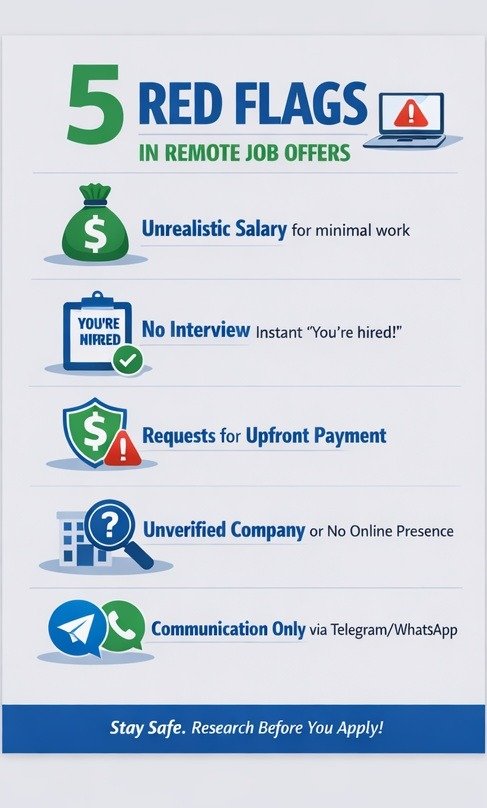
Be careful when the salary is very high
- Be wary of job postings that promise incredibly high salaries for minimal work or that require you to pay upfront for equipment, training, or software. Legitimate companies rarely ask for payment from their prospective employees.
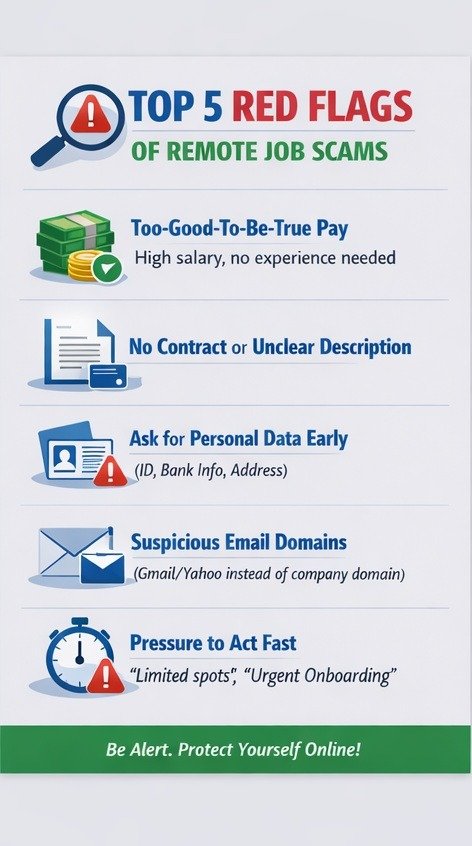
- Moreover, an overly aggressive recruitment process, pushy demands for personal information early on, or communication solely through personal email addresses or messaging apps instead of official company channels should raise immediate suspicion.
Lacks of Specific Details in Job Description
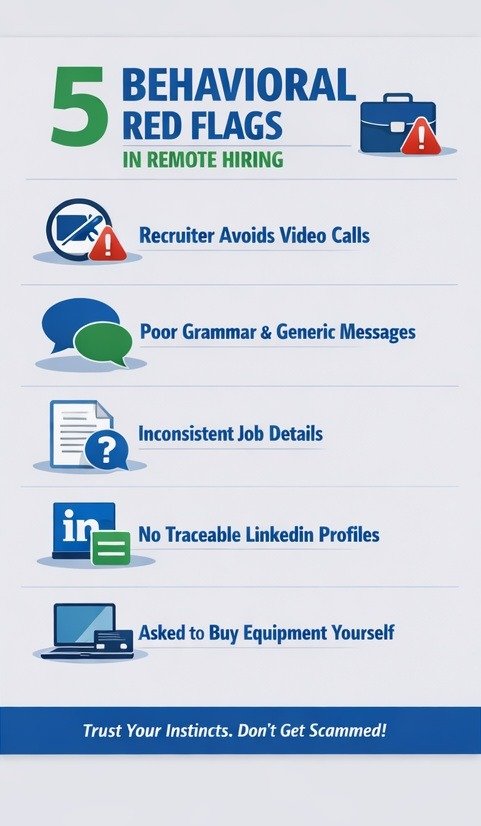
Another significant warning sign is a vague job description that lacks specific details about the role, responsibilities, or the company itself. Scammers often keep these descriptions intentionally broad to cast a wider net. If a company cannot provide a clear understanding of what you’ll be doing or where they are located (even if it’s a remote-first company, they’ll still have a corporate presence), it’s a significant red flag.
The Promise That’s Too Good to Be True
Be cautious of offers that seem too good to be true, especially if they lack a formal interview process or rely on instant hiring without any vetting. Taking the time to research the company, scrutinize the job offer, and trust your instincts can save you from falling victim to a remote job scam.
The Information About the Company is Incomplete – They do Not Have a Website
One of the most prominent red flags to watch for is an unsolicited job offer, especially if it comes out of the blue with little to no prior interaction. Scammers often impersonate legitimate companies and will reach out via email or social media platforms with seemingly attractive offers. Furthermore, an overly generous salary or benefits package for a role that doesn’t seem to warrant it should raise suspicion. If it sounds too good to be true, it often is.
A non-existent or poorly maintained company website, broken links, or generic email addresses (like @gmail.com instead of a company domain) can be signs that something is not right.
By staying vigilant and recognizing these red flags, you can significantly increase your chances of securing a genuine and fulfilling remote job.
Now you know how to spot the fakes. Here you can surf safety to find the real deal
If you have any questions, write to us.